

Skip to content

OneStream Account Reconciliation: Managing Account Reconciliations During the Closing Process

Organize account balances, supporting documents, and approvals on a single platform—workflow-driven, transparent, and auditable.

Classification

Integrating Account Reconciliation into the Financial Close

For CFOs and leaders in Accounting, Group Accounting, and Finance Transformation who want to organize account reconciliations in a more transparent, consistent, and auditable manner.

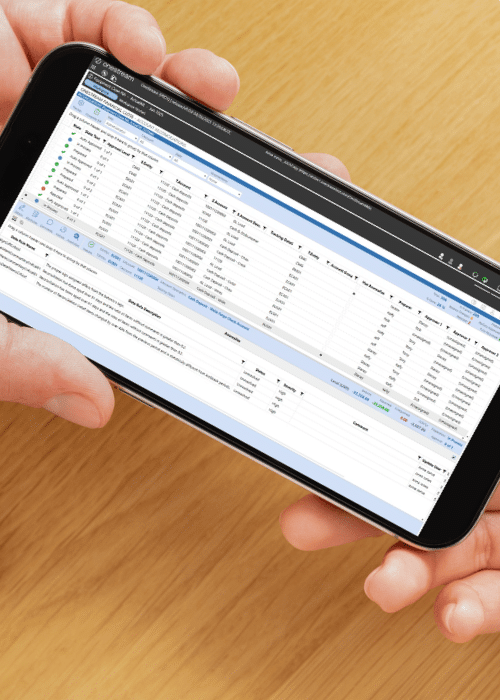
OneStream integrates account reconciliation with consolidation, reporting, and the financial close on a common data and process foundation. Workflows, status tracking, supporting documentation, and approvals are all managed within the platform.

In many companies, account reconciliation is still handled using Excel files, emails, and manual status lists. This increases the effort required for reconciliation and makes it difficult to maintain an overview of open items, processing statuses, and approvals. BLUEBIRD provides support in the design, implementation, and optimization of reconciliation processes.

BACKGROUND

Why OneStream Is Relevant for Account Reconciliation

Account reconciliation is a key component of a controlled financial closing process. When reconciliations are managed using separate files, local lists, or manual follow-ups, it results in data inconsistencies, delays, and limited auditability.

OneStream integrates account reconciliation into the platform’s logic. This results in:
Structured, managed coordination processes with clear responsibilities
Consistent status logic for open, in-progress, and completed votes
Audit-compliant documentation of comments, attachments, and approvals
greater transparency regarding risks, exceptions, and escalations
a closer integration of reconciliation, reporting, and financial close
OneStream is particularly relevant in more complex finance organizations where account reconciliation needs to be embedded in processes and managed in a way that is auditable.

Platform Advantage

Your Value with OneStream for Account Reconciliation

OneStream’s structural advantage in account reconciliation lies in the integration of reconciliation logic, workflow, status control, and the database within a single platform. Specifically, this means:

Integrated Database

Process account balances and reconciliation data within the same platform.

Clear Responsibilities

Manage preparation, review, and approval through defined workflows.

Transparent Status

Get a centralized overview of open, ongoing, and approved polls.

Comprehensible Documentation

Comments, corrections, decisions, and supporting documentation related to the voting process.

Connection to the Financial Close

Link the reconciliation status and closing processes more closely.

OneStream Account Reconciliation

What OneStream Offers in the Area of Account Reconciliation

OneStream helps companies map out account reconciliation in a structured, traceable, and workflow-driven manner within the platform. This includes, in particular:

OneStream Account Reconciliation_Bluebird_Consulting

Combining Reconciliation, Trial Balance, and Reporting

A key advantage of OneStream is that account reconciliation is not organized separately from the reported financial data. Reported balances, the trial balance, and reconciliation status are all integrated within the same platform. For reconciliation, OneStream uses the same data sources, data mappings, account hierarchies, workflow structures, and security logic as it does for other finance processes. There is no need to collect source data multiple times and replicate it in separate reconciliation environments.

  • It becomes immediately apparent whether reported values are based on reconciled accounts
  • Immediate visibility when previously reconciled balances have changed due to new data imports
  • Reduced effort, since base information needs to be processed and made available only once
OneStream Account Reconciliation_Bluebird_2

Guided Workflow, Status, and Documentation

OneStream enables workflow-based reconciliation logic in which processing, review, approval, and escalation are mapped within a process framework that is transparent to business users—rather than through manual status lists, emails, and individual tracking.

  • Managers can see which reconciliations are pending, in progress, or approved
  • Review and approval steps remain documented and traceable
  • Outstanding items can be tracked in a targeted and prioritized manner
  • Supporting documentation and explanations are available within the process object
OneStream Account Reconciliation_Bluebird_3

Internal Controls, Audit Trail, and Risk Management

OneStream supports a structured, controlled reconciliation model with documented status changes, a complete audit trail, and risk-based control options. Imported values, adjustments, mapping changes, and process steps are documented in an audit-proof manner—from the report back to the source. This makes account reconciliation more efficient and more firmly anchored as an integral part of internal control systems.

  • Organizations with high governance and auditability requirements
  • need to be able to trace who processed, reviewed, and approved a reconciliation
  • require complete documentation of comments, changes, and approvals
  • do not want to wait until the end of the period to identify critical reconciliations

Use Cases

Where OneStream Delivers the Greatest Value in Account Reconciliation

OneStream’s practical value is realized when account reconciliation needs to be organized as a structured, controlled component of the financial closing process. This is particularly relevant for:

  • a large number of accounts and entities requiring reconciliation

  • manually managed Excel or email processes

  • a lack of transparency regarding open items and processing statuses

  • high requirements for supporting documentation, comments, and approvals

  • the desire for closer integration between reconciliation and the financial close


The concrete benefits are primarily reflected in greater transparency regarding the reconciliation status, reduced manual coordination, improved auditability of decisions and exceptions, and a more stable foundation for the entire financial close process.

TARGET AUDIENCES

Which Companies OneStream Is Particularly Well-Suited For

OneStream is particularly well-suited for companies that want to make account reconciliation an integral part of their finance architecture. These include, in particular:

  • Multinational corporations and larger mid-market companies with many accounts and entities relevant to reconciliation
  • Companies with established finance landscapes that want to bring reconciliation and the close process closer together architecturally
  • Organizations with high requirements for auditability, governance, and documentation
  • Finance departments in need of modernization that want to make reconciliation processes more structured and audit-ready
  • Hyperion or other existing customers who are reevaluating their target state in the area of reconciliation

OneStream is particularly relevant for Accounting, Group Accounting, Corporate Accounting, CFO-level governance functions, finance transformation teams, and project managers responsible for EPM migrations.


bluebird-onestream-account-reconciliation-consultant-profile

SUITABILITY AND LIMITATIONS

When OneStream Account Reconciliation Is Less Suitable

OneStream is not the right solution in every context. The benefits of the platform approach are realized when account reconciliation is intentionally organized within a unified finance, workflow, and governance framework. OneStream is typically less suitable:

  • when there is only a very small, narrowly defined need for reconciliation without a platform-wide perspective

  • when standard requirements suffice without significant integration or governance objectives

  • when the target state, accountability model, and process logic are not clearly defined

  • when the organization cannot or will not support the platform approach from a technical or operational standpoint


When evaluating account reconciliation, the target architecture, process ownership, and adaptability are just as critical as the scope of functionality.

CONSULTING APPROACH

Why Companies Are Adopting Account Reconciliation with BLUEBIRD

BLUEBIRD combines in-depth financial expertise with extensive experience in OneStream, consolidation, planning, reporting, and financial close. As a OneStream Platinum Partner with our own dedicated OneStream unit, we support companies from the initial business design phase through data modeling and implementation to integration into existing finance and system landscapes. In doing so, we always consider OneStream within the context of the respective processes, requirements, and existing architecture.

For you, this means:

  • Business analysis and target state development for account reconciliation, governance, and close-related processes—independent and not product-driven

  • Implementation and configuration based on proven design principles for status logic, responsibilities, and workflow

  • Integration of data sourcing and reconciliation logic to ensure consistent and auditable reconciliation foundations

  • Process design for preparation, review, approval, escalation, and documentation

  • Optimization of existing OneStream environments with a focus on transparency, auditability, and process reliability

  • Migration from legacy systems that have evolved over time, conducted in a methodically structured and technically sound manner, without a one-size-fits-all replacement strategy

BLUEBIRD approaches these issues from the perspective of process ownership, governance, and the target vision for the finance architecture.

bluebird-onestream-account-reconciliation-team-laptop-reconciliation

FAQ

Frequently Asked Questions About OneStream Account Reconciliation

In many cases, OneStream can effectively address reconciliation-related requirements within the platform’s logic—especially when reconciliation needs to be more closely integrated with financial close, reporting, and governance. Whether a standalone specialized solution is still appropriate depends on the target state and the complexity of the requirements.

The advantage lies in the closer integration of account reconciliation, status management, documentation, trial balance, and the closing process. This reduces data silos, reconciliation efforts, and reliance on parallel files and email processes.

Yes, especially when many accounts, companies, and stakeholders need to be integrated into a structured reconciliation process. However, this requires a clearly defined target model for responsibilities, status logic, and governance.

Comments, attachments, status changes, and approvals can be documented in an audit-traceable manner. Comprehensive audit trails for changes to data, metadata, and processes, as well as drill-back capabilities, enhance auditability and support a robust governance model in the financial closing process.

In OneStream, account reconciliation can be more closely integrated with the trial balance, financial reporting, and the financial close. This reduces the risk that reported balances and reconciliation statuses will diverge.

Yes. When underlying account balances change due to new data imports or adjustments, it becomes easier to determine whether previously reconciled accounts need to be reviewed again.

Yes, especially in situations where exceptions, high-risk accounts, and notable changes need to be prioritized more specifically and integrated into a structured, controlled reconciliation process.

Ideally, early on—before the target vision, responsibilities, and platform logic have been defined. That is precisely where it is decided whether reconciliation will simply be digitized or established as a viable component of the finance architecture.

Next Steps

Take a structured approach to the next step—before the next decision is made.


Manage account reconciliation in a controlled manner, document it, and integrate it more closely into the close process. Choose a date that works for you. We’ll discuss your current situation and possible next steps.

Schedule an appointment